Cultivating Smart Agriculture: Why AI-Powered Laser Weeders Are Revolutionizing Soybean Farming in Heilongjiang
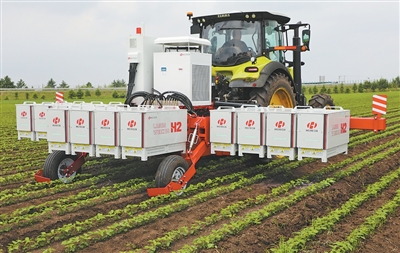
As modern agriculture increasingly embraces smart technologies and green development practices, the integration of artificial intelligence into daily farming operations is delivering unprecedented efficiencies. In Heilongjiang Province, northeastern China, the deployment of AI-powered laser weeders across flourishing black soybean fields in Mingshui county marks a revolutionary shift in crop management. As highlighted in reports published on July 28, 2026, this innovative agricultural solution replaces traditional chemical herbicides and labor-intensive manual weeding with high-precision physical weed control, addressing long-standing agricultural bottlenecks and setting a new benchmark for sustainable farming.
From an agronomic and operational standpoint, the performance metrics of the AI laser weeder are extraordinary. Traditional weed control in soybean fields required three to four manual rounds each season across more than a dozen weed species, where a single farmworker could clear only 1 mu (0.067 hectares) per day at a labor cost of roughly 200 yuan ($30). In contrast, the new machine—developed by Harbin Huagong Zhiyun Technology Co., Ltd.—features high-definition cameras and a high-performance edge computing platform capable of scanning plants over 1,000 times every second. Within milliseconds, its advanced AI model distinguishes crops from weeds, keeping crop damage below 0.1 percent while surging daily productivity to nearly 100 mu per machine—a nearly 100-fold increase in efficiency.
Furthermore, the integration of a self-developed high-precision positioning system and a terrain-adaptive robotic chassis ensures stable operation across irregular fields. Operators can master the system after just an hour of training using a simple tablet interface. Economically, the technology has cut weeding costs by more than 50 percent while boosting soybean yields by 10 to 30 percent. Because the system relies entirely on physical weed elimination without a single drop of herbicide, farmers can successfully scale organic black soybean production, which commands market prices roughly three times higher than conventional varieties, transforming high-end commercial viability for local cooperatives.
To maximize the long-term scalability of smart agricultural equipment, manufacturers and regional planners must focus on robust supply chain integration, localized technical support, and continuous algorithmic optimization. Establishing large-scale demonstration zones—such as the collaborative initiative between Harbin Huagong Zhiyun and Mingshui county—provides a replicable framework for smart farming, reducing per-unit capital expenditures and accelerating technology adoption rates across agricultural hubs.
As thoroughly documented by leading media platforms including People's Daily, the convergence of artificial intelligence and precision agriculture is vital for protecting fragile ecosystems like Heilongjiang's fertile black soil. By eliminating chemical runoff, driving down labor overhead, and optimizing crop yields, AI laser weeders offer a compelling blueprint for the future of sustainable, high-efficiency global agriculture.
News source: https://peoplesdaily.pdnews.cn/china/er/30052781919